Search This Blog

Showing posts with label food. Show all posts

Friday, November 16, 2012

Avoid Holiday Weight Gain

 
The holidays can be a tricky time if you want to avoid holiday weight gain. There are so many tempting treats, you need to be proactive to stick to good eating habits.   That means having a battle plan:


At work, where the parade of chocolate, cakes and cookies seems endless, tell yourself: “If I’m going to eat something, it really needs to be fabulous and worth the splurge.” “Flavanol-rich dark chocolate is one of the healthier choices," says Jamieson-Petonic. "Research shows it may help to control blood pressure and protect the heart."

Before the party: “When you're hungry and your blood sugar is low, you start to crave foods that are carb-rich and fatty, which can contribute to weight gain. A good defense is to have a small snack of carbs and protein before leaving home. Try apple slices with a tablespoon of peanut butter, or a few crackers with low-fat cheese.”
 
At the appetizer table, be conservative: “Avoid anything deep-fried, creamy or saucy, since these foods tend to be loaded with fat and calories; for example, cheese balls, pigs in a blanket and mini quiches. Opt for appetizers that appear closer to their natural state, such as veggies with herbs, shrimp cocktail, fresh fruit, grilled chicken skewers with a sweet and sour sauce, which is lower in fat and calories than a cream sauce, and grilled shrimp with cocktail sauce.”

At mealtime, choose an entrée you really want, and savor a small portion of it. Another tip: Instead of a large dinner plate, use a small, appetizer-size one (shoot for a diameter of six inches) to control your portions. Fill half of the plate with fruits and veggies, a quarter with protein, such as fish, poultry or meat, and a quarter with carbs, such as brown rice or whole grain pasta.

For dessert, put a small bit of cake or pie in a wine glass; if the dessert has a crust (for example, pumpkin pie), leave the crust behind. Not only will your dessert look pretty, you’ll cut down on your portion size and the calories you consume. It also helps to cut back on your calories and fat earlier in the day, so you can enjoy dessert now.
Along with the holiday eating, engage in plenty of physical activities to burn off extra calories: make a snowman with the kids, go out caroling, play a game of table tennis, dance and volunteer. If possible, walk to your holiday parties.

Finally, remember the real joy of the season is spending time with friends and family, not food. When you focus on your loved ones, you’ll be happier, not plumper!

Tuesday, July 17, 2012

WATERMELON MAY REDUCE THE RISK OF CARDIOVASCULAR DISEASE


Cardiovascular disease (CVD) is the leading cause of death in the U.S. If you or someone you know has CVD, or has high cholesterol, high blood pressure, obesity, or any of the other factors that could lead to CVD, you have probably been told to exercise, reduce stress levels and avoid certain foods like sugar, white flours and junk food. Or you may have been prescribed drugs like statins. However, there are certain foods — known as ‘functional foods’ — that, in addition to the nutrients they supply, also specifically promote health or prevent disease in a certain part of the body. In the case of CVD, you still want to exercise and eat well, but there are also functional foods that may help prevent it, and may even help you avoid drugs.
Let’s just take one of the CVD risk factors: hypertension, high blood pressure.
Normal blood pressure is considered 120/80 or below. High blood pressure starts at 140/90. Between those you have a rating called prehypertension, which basically means that if you don’t do something to lower your blood pressure you could end up with full-blown hypertension — something you really want to avoid.
The risk level is much higher with hypertension than prehypertension, so getting your blood pressure under control now is a smart health move.
What functional foods help prehypertension? According to a recent study conducted at Florida State University, watermelon might be just what you need.
The study, though small, is very promising and is the first on human subjects. While the participants didn’t actually eat watermelon, they were given six grams daily of the amino acid L-citrulline/L-arginine from watermelon extract for six weeks. There were four men and five women, ages 51 to 57, and each were prehypertensive. All participants had positive results: improved arterial function and lowered blood pressure.
The real ‘active” ingredient, the one that’s making the difference, is the amino acid L-arginine. However, L-arginine taken on its own can be hard on the gastrointestinal system. The better option is another amino acid, L-citrulline, which converts to L-arginine once in the body.
Watermelon is loaded with L-citrulline, is well tolerated, has no side effects, and provides the added benefits of Vitamins A, B6 and C along with fiber, potassium and lycopene, a powerful antioxidant.
If you’re looking for natural solutions to protect your heart, give watermelon extract a try. It is available at local health food stores and online!


Thursday, April 5, 2012

The Many Health Benefits of Raw Honey

According to Dr. Ron Fessenden, M.D., M.P.H. the average American consumes over 150 pounds of refined sugar, plus an additional 62 pounds of high fructose corn syrup (HFCS). In comparison, we consume just one pound of honey per year. Instead, Dr. Fessenden recommends that increasing the intake of pure “raw” honey and drastically reducing the refined sugars and HFCS would reap enormous health benefits.
A report in the Journal of the Royal Society of Medicine further backs the benefits of raw honey with their opinion:
“The therapeutic potential of uncontaminated, pure, raw honey is grossly underutilized. It is widely available in most communities and although the mechanism of action of several of its properties remains obscure and needs further investigation, the time has now come for conventional medicine to lift the blinds off this ‘traditional remedy’ and give it its due recognition.”
What is Honey?
Honey is far more than a natural sweetener. It is a “functional food”, which means it is a natural food with health benefits. It contains natural antioxidants, enzymes and minerals including iron, zinc, potassium, calcium, phosphorous, magnesium and selenium. Vitamins found in honey include B6, thiamin, riboflavin, pantothenic acid and niacin. In addition, the nutraceuticals contained in honey help neutralize damaging free radical activity.
One tablespoon of honey contains 64 calories, yet it has a healthy glycemic load around 10 for 1 Tbsp, which is a little less than a banana. and does not cause a sugar spike and elevated insulin release like white sugar. Although honey is an affordable food, bees spend thousands of hours collecting pollen from around two million flowers to make one pound of pure honey.

Why Choose Raw Honey?
Research by the Palynology Research Laboratory at Texas A&M University tested 60 honey products from supermarkets and grocery stores and found that 76% contained no trace of pollen. The Food and Drug Administration (FDA) maintains that any honey products that have been ultra-filtered, as these have, are not actually honey and therefore the health benefits of honey cannot be assumed.
Commercial honey is often heavily processed and may even have been chemically refined. Excessive heat destroys the natural enzymes, vitamins, and minerals in honey. Filtering and processing eliminates many of the beneficial phytonutrients including pollen and enzyme-rich propolis. The only way to achieve sparkling clear honey is by heat, so avoid the golden syrup-like honey in favor of opaque organic raw honey.
Raw honey is a concentrated source of natural goodness. Benefits include:
•    A rich taste
•    High nutritional benefits
•    Promotes the growth of good bacteria in the intestine
•    Soothes and heals skin wounds
•    Blocks free radicals
•    Aids sleep
•    Counters pollen allergies
•    Reduces homocysteine levels to maintain a healthy heart
Best of all, honey does not need special storage or refrigeration – use it by the spoonful straight from the jar.

The Health Benefits of Honey
Honey-infused bandages are known to aid healing. Peter Charles Molan at the University of Waikato, New Zealand found that honey reacts with the body’s fluids to make hydrogen peroxide, creating an inhospitable environment for bacteria.
Research studies have already shown that replacing sugar with honey in the diet results in less weight gain and lower blood sugar levels. Switching to honey may even aid in weight loss when compared to diets containing sugar or HFCS.
Honey provides a ready supply of energy in the form of liver glycogen, making it ideal for energetic morning starts and as a pre- and post-exercise energy source. It also boosts the immune system, acting as a preventative against any number of debilitating diseases.
Honey contains many antioxidants including flavonoids to maintain the body’s health balance. Pinostrobin supports enzyme activity while the antioxidant-rich organic acids maintain an optimal slightly acidic pH in the body. Pinocembrin is an antioxidant flavonoid thought to be unique to honey while the amino acids in honey are the body’s building blocks of protein.
Honey promotes restorative sleep as it slowly releases the glycogen needed for essential bodily functions during sleep. Adding honey to milk at bedtime helps the body release melatonin into the brain which is necessary for deep sleep. Melatonin also boosts immunity and helps rebuild tissue during periods of rest. Poor sleep, by comparison, has been shown to be a risk factor for hypertension, obesity, Type 2 diabetes, heart disease, stroke and arthritis. As honey is a proven sleep aid, it naturally lowers the risk of all these health problems.

Although honey is one of the healthiest sweeteners, it still should be used in moderation.

Raw honey can be found at local flea and farmers markets, local farms, and on the internet.   Local raw honey is also known to be a homeopathic treatment for certain types of allergies and even asthma. 

Sources:
http://www.worldclassemprise.com/custom.aspx?id=22
http://products.mercola.com/honey/
http://www.mamahealthy.com/sweeteners-spices-ingredients/raw-honey-benefits-organic-honey
http://www.benefits-of-honey.com/honey-nutrition.html
http://www.benefits-of-honey.com/honey-benefits.html
http://www.naturalnews.com/034102_honey_consumer_alert.html
http://webcache.googleusercontent.com/search?q=cache:http://www.marksdailyapple.com/is-honey-a-safer-sweetener/#axzz1pZs2Na8k
http://www.draxe.com/the-top-5-natural-allergy-fighters/
http://www.ajcn.org/search?fulltext=RAW+HONEY&submit=yes&x=11&y=10
http://www.drgrotte.com/honey-medicine.shtml

Tuesday, April 3, 2012

Eating Healthy While Eating Out!

When you eat at home, you know what you’re getting. Head to a restaurant, and it’s another story.
The ingredients, method of preparation, and portion size can easily add excess calories to your diet.

Restaurant menus have so many choices and are often full of unfamiliar terms. Is a food fried or baked? Does it come with a sauce or dressing? If you’re not careful, you won’t know answers to these questions and more until you ask them.

Before heading out to dinner tonight, here are some tips to enjoy a healthy meal.

So Many Options
When considering what to choose from dozens of options, you can easily become overwhelmed. Just as easy is to be tempted by the unhealthy choices. Thankfully, most restaurants these days include healthy options on their menus and label them accordingly.

For your main course, choose chicken, turkey, ham, or fish over beef. If it comes with a sauce, avoid creamy or cheesy sauces and go with a tomato or vegetable sauce.

Additionally, try to include a salad, fruit, or steamed vegetable, and go sparingly on dressings, cheese, salt, and butter. Instead of chips, fries, or fried rice, choose boiled rice or potatoes.

Need some extra seasoning? Leave the salt and butter alone. Instead, reach for some fresh herbs or lemon. And if the meal comes with bread, choose a whole-grain option and go with a sherbet, sorbet, or fresh fruit if you can’t say no to dessert.

Food Preparation
Menus are often vague when it comes to the way the food is prepared. If you're not sure or the menu doesn't say how the food is prepared, be sure to ask.

Remember—restaurant foods are full of fats, as fats help keep the food moist and yummy.

To play it safe and to avoid excess fat, choose foods that are grilled, boiled, steamed, stir-fried, or poached instead of fried, baked, or battered. Also, take control of your food destiny by asking that your meal be prepared with olive oil instead of butter or other fats.

When your salad arrives, opt for oil and vinegar rather than dressing. Or have your dressing on the side so you can limit the amount you use.

Terms to watch for include “lightly breaded,” “wrap,” “baked,” and “vinaigrette.” These may all sound healthy but may are deceiving.

Foods that are lightly breaded are often deep-fried. A wrap may sound like a good option, but two slices of bread may have fewer calories than a 10-inch tortilla. Baked sounds better than fried, but it could possibly mean the food is baked deep-dish style and contains high-fat, creamy ingredients. While baked salmon is a good choice, baked lasagna is high in fat. And though vinaigrette dressing sounds healthier than a cream based dressing, it is mostly oil, so order it on the side.

Portion Control
Not only do portions keep getting bigger, so do the plates that hold them! With so much food sitting in front of you, it is sometimes hard to resist the temptation to eat it all—especially when you paid so much for it.

To avoid the temptation to eat unhealthily large portions, split or share the entree, then choose a soup, salad, or extra side. If you know you'll get too much food, go ahead and ask for a to-go box when you order. That way you can divide the food as soon as you get it, so you won’t have to stare at the extra food as you eat.

Know What to Look For
Knowing what to look for on a menu and what to avoid will help you choose healthier, low-fat options. If you find that your diet is lacking fruits, vegetables, or whole grains when you eat out, make up for it when you eat your other meals at home.

Remember that healthy eating is only half of the battle when it comes to losing weight.

A regimented exercise plan is a necessity for effective and healthy weight loss!

Adjust Your Mindset!

Eating out should be a luxury, not an everyday affair. If you find yourself choosing at restaurants more often than you’d like—especially if you’re eating all the wrong foods, cut back on your eating out ways and watch your calorie intake drop instantly!

Thursday, December 29, 2011

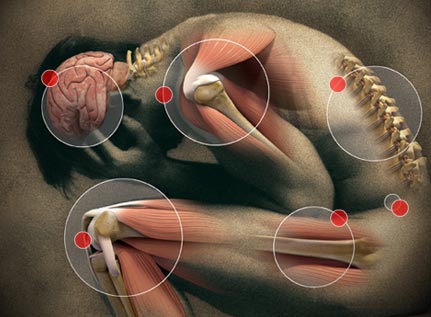
13 Foods That Fight Pain


While many foods taste great, they are also powerful healers in a vibrant multicolor disguise. The best healing remedies also taste fabulous (I can’t say that about any prescription medications). Plus, foods won’t cause the nasty common side effects that most drugs cause.

1. Cherries
Muraleedharan Nair, PhD, professor of natural products and chemistry at Michigan State University, found that tart cherry extract is ten times more effective than aspirin at relieving inflammation. Only two tablespoons of the concentrated juice need to be taken daily for effective results. Sweet cherries have also been found to be effective.

2. Blackberries 
3. Raspberries 
4. Blueberries and 
5. Strawberries
Dr. Nair later found the same anti-pain compound in berries like blackberries, raspberries, blueberries and strawberries

6. Celery and Celery Seeds
James Duke, Ph.D., author of The Green Pharmacy, found more than 20 anti-inflammatory compounds in celery and celery seeds, including a substance called apigenin, which is powerful in its anti-inflammatory action. Add celery seeds to soups, stews or as a salt substitute in many recipes.

7. Ginger
Ginger reduces pain-causing prostaglandin levels in the body and has been widely used in India to treat pain and inflammation. A study by Indian researchers found that when people who were suffering from muscular pain were given ginger, they all experienced improvement. The recommended dosage of ginger is between 500 and 1,000 milligrams per day. If you’re taking medications, check with your health practitioner for possible herb-drug interactions.

8. Turmeric
Turmeric (curcuma longa) is the yellow spice commonly used in Indian curries. In research it has been shown to be a more effective anti-inflammatory than steroid medications when dealing with acute inflammation. Its main therapeutic ingredient is curcumin. Research shows that curcumin suppresses pain through a similar mechanism as drugs like COX-1 and COX-2 inhibitors (without the harmful side effects). Choose a standardized extract with 1500 mg of curcumin content per day.

9. Salmon 10. Mackerel and 11. Herring
Many fatty fish like salmon, mackerel and herring also contain these valuable oils. Omega-3s convert in the body into hormone-like substances that decrease inflammation and pain. According to Dr. Alfred D. Steinberg, an arthritis expert at the National Institute of Health, fish oil is an anti-inflammatory agent. Fish oil acts directly on the immune system by suppressing 40 to 55 percent of the release of cytokines, compounds known to destroy joints. Many other studies also demonstrate that eating moderate amounts of fish or taking fish oil reduces pain and inflammation, particularly for arthritis sufferers.

12. Flax Seeds and Flax Oil
Freshly-ground flax seeds and cold-pressed flax oil, contain plentiful amounts of fatty acids known as Omega-3s. Do not cook with flax oil otherwise it will have the opposite effect-irritating the body’s tissues and causing pain.

13. Raw Walnuts and Walnut Oil
Raw walnuts and walnut oil also contain the same powerful Omega-3 fatty acids that fight pain and inflammation in the body.

When it comes to pain, food really is the best medicine.